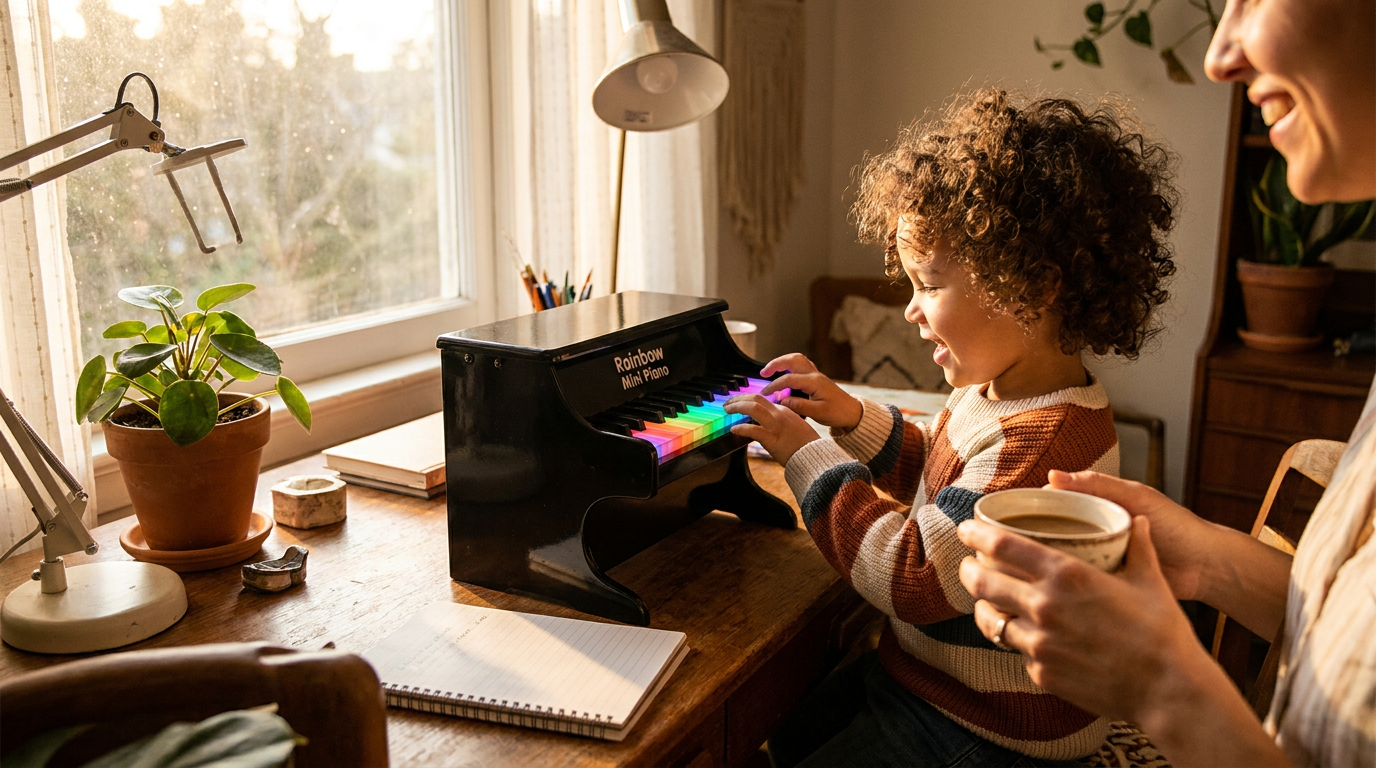
5-Step Desktop Setup for Rainbow Mini Piano
 Sam VasquezBuying Guide Lead
June 22, 2026 — The rise of compact, tactile music interfaces has brought the Rainbow Mini Piano to the forefront of modern desktop workstations. This shift reflects a broader interest in space-efficient tools that serve both educational and creative functions without the footprint of traditional instruments.
Integrating a flexible musical interface into a workspace requires a balance between accessibility and ergonomics. According to the LA Phil Store, the 49 rainbow-colored keys on these roll-up models allow users to perform without the bulk of a full keyboard, offering built-in speakers and record functions that fit between a monitor and a computer keyboard. While some users might look at the PopuPiano, which functions primarily as a battery-powered MIDI controller and teacher, the Rainbow Mini Piano offers a more direct, standalone experience for those who want to play immediately upon unrolling. For those just starting out, a mini piano for beginners provides the necessary foundation to transition from simple melodies to more complex compositions.
The 5-Step Desktop Integration
Setting up a desktop rainbow piano keyboard requires more than just clearing space; it involves optimizing the surface for the specific tactile response of flexible silicone keys. First, ensure the surface is completely flat and non-porous to prevent the sensor under the 49 keys from misfiring. Second, position the internal speaker or the 3.5mm jack output toward your primary listening position to take advantage of the built-in vibraphone, clarinet, and violin tones. Third, if you are using the device as a color coded music learning tool, align the visual spectrum of the keys with your instructional materials to maintain a consistent cognitive link between color and pitch. Fourth, manage your power source; while many models use USB power, keeping a set of batteries installed prevents session interruptions if you move the keyboard away from your computer. Finally, calibrate your touch; because these are pressure-sensitive pads rather than weighted hammers, a firm, vertical strike is required for consistent volume.
If you're on a budget, the standard roll-up model is the most practical choice because it serves as both a toy and a legitimate practice tool. Between these two options—the high-tech app-integrated controllers and the straightforward Rainbow Mini Piano—I'd go with the latter for a desk setup. It doesn't require a software login just to play a C-major scale. Skip this if you already own a full-sized weighted digital piano and have no intention of traveling or practicing in small spaces. For those who prioritize mobility, the Rainbow Mini Piano performance and portability features make it a superior choice over rigid plastic alternatives. Understanding how this fits into a color coded music learning tool workflow can significantly decrease the time it takes to memorize scales.
Expert tip: When using the record and playback feature on the desktop, place a thin foam mat under the keyboard to dampen the physical 'thumping' sound of your fingers hitting the desk, which allows the built-in speaker audio to remain clearer.
Here's what I'd actually buy: the 49-key Rainbow Mini Piano. It strikes the right balance between a usable range for two-handed play and a footprint that doesn't take over your entire office.
Sources

Photo by Kha Ruxury on Pexels
- Rock and Roll It Rainbow Piano - LA Phil Store
- Rock and Roll It Rainbow Piano | Roll-up Keyboard | The Met Store
- a portable piano teacher that's also a MIDI keyboard for your DAW or ...