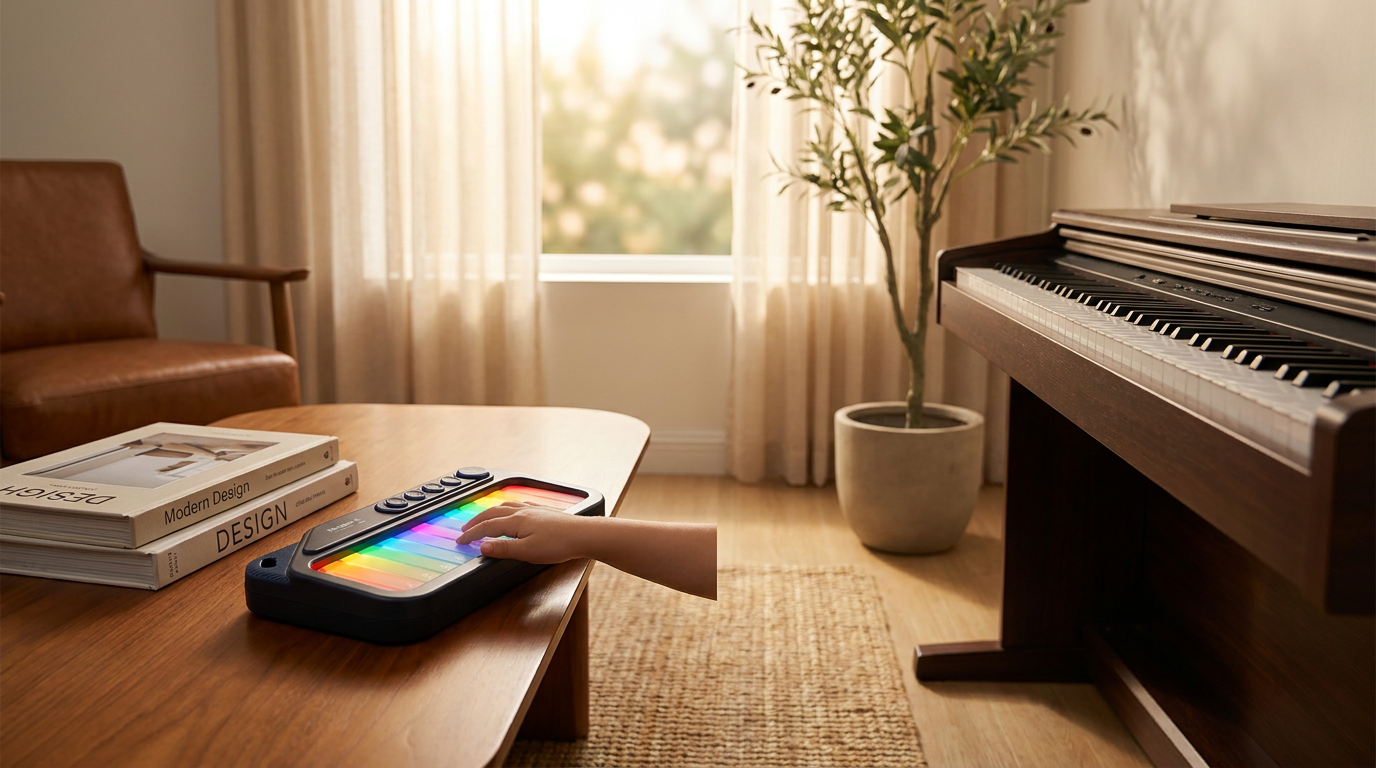
Rainbow Mini Piano and the Beginner Learning Curve
 Maya ChenContributing Editor
June 12, 2026 — The shift toward compact, color-driven instruction is challenging the dominance of full-sized digital keyboards, with the Rainbow Mini Piano emerging as a central alternative for early-stage learners. The conventional wisdom says that a beginner should start on a weighted 88-key instrument to build finger strength, but this ignores the high abandonment rates caused by technical intimidation and lack of immediate feedback.
According to analysis from MusicRadar on the best keyboards for beginners, smaller form factors like the 37-mini-key Yamaha PSS-A50 are increasingly recognized as viable entry points for those with smaller hands or limited space. This acknowledgment signals a departure from the "full-size or nothing" mentality that has historically governed music education. By prioritizing accessibility over traditional key weight, hardware like the Rainbow Mini Piano addresses the psychological barriers that prevent a student from completing their first month of practice.
The 4-Point Accessibility Framework
When evaluating a mini piano for beginners, the hardware must be judged on specific ergonomics rather than just price or brand legacy. The first metric is spatial footprint; a compact chassis allows for integration into a desk environment where a student already spends time, rather than requiring a dedicated studio space. Second is the visual interface. Unlike standard monochrome keys, the Rainbow Mini Piano utilizes a distinct color-to-pitch mapping system that reduces the cognitive load of reading sheet music. Third is the tactile response of the keys, which must be light enough for child-level motor skills but consistent enough to develop rhythm. Finally, there is the portability factor, enabling practice consistency across different environments. Here's the part nobody talks about: a high-end digital piano that stays in a box because it is too heavy to move is effectively useless for a beginner. Run the math on practice hours: a portable color coded piano that is accessible 100% of the time will always outperform a professional-grade instrument that is only accessible 10% of the time. This is especially true when using a colorful keyboard for kids where the primary goal is engagement rather than concert-level dynamics. Traditionalists argue that color-coding creates a crutch, but mastering notation with the Rainbow Mini Piano system actually provides a scaffold that can be removed once the brain has mapped the intervals. This is a more efficient color coded music learning tool than the rote memorization of black-and-white patterns.
Expert tip: When starting out, ignore the hundreds of built-in digital voices and focus on the primary piano tone; the goal of a mini keyboard is to master the physical relationship between the keys and the notes before exploring synthesized sound effects.
I’ll change my mind when longitudinal studies show that high-resistance weighted keys actually improve retention rates for students under the age of ten, but the current data suggests that removing friction is the only way to keep beginners at the bench.
Sources
- Best keyboards for beginners 2026: keyboards for all ages
- Beginner Keyboards - Yamaha USA
- Beginner Piano: Mini Lessons - YouTube