A Rainbow Piano for Sensory Play: An Argument Against Instruction
 Maya ChenContributing Editor
Everyone buys a rainbow piano to teach colors and motor skills, but its true power lies in teaching nothing at all—it's a tool for pure, unstructured emotional regulation. The conventional wisdom says a rainbow piano for sensory play is meant to build a foundation for cognitive tasks. This analysis rejects that premise. The pressure to perform, even in play, can generate frustration, negating the sensory benefits.
The Fallacy of Goal-Oriented Play
Here's the part nobody talks about: goal-oriented play creates pressure. When an adult prompts a child to 'find the red key' or 'play a song,' the instrument transforms from a tool of discovery into a test with a pass/fail outcome. This expectation can be overwhelming for a child, particularly one who is already experiencing sensory overload or big emotions. The true value emerges when we remove the goals.
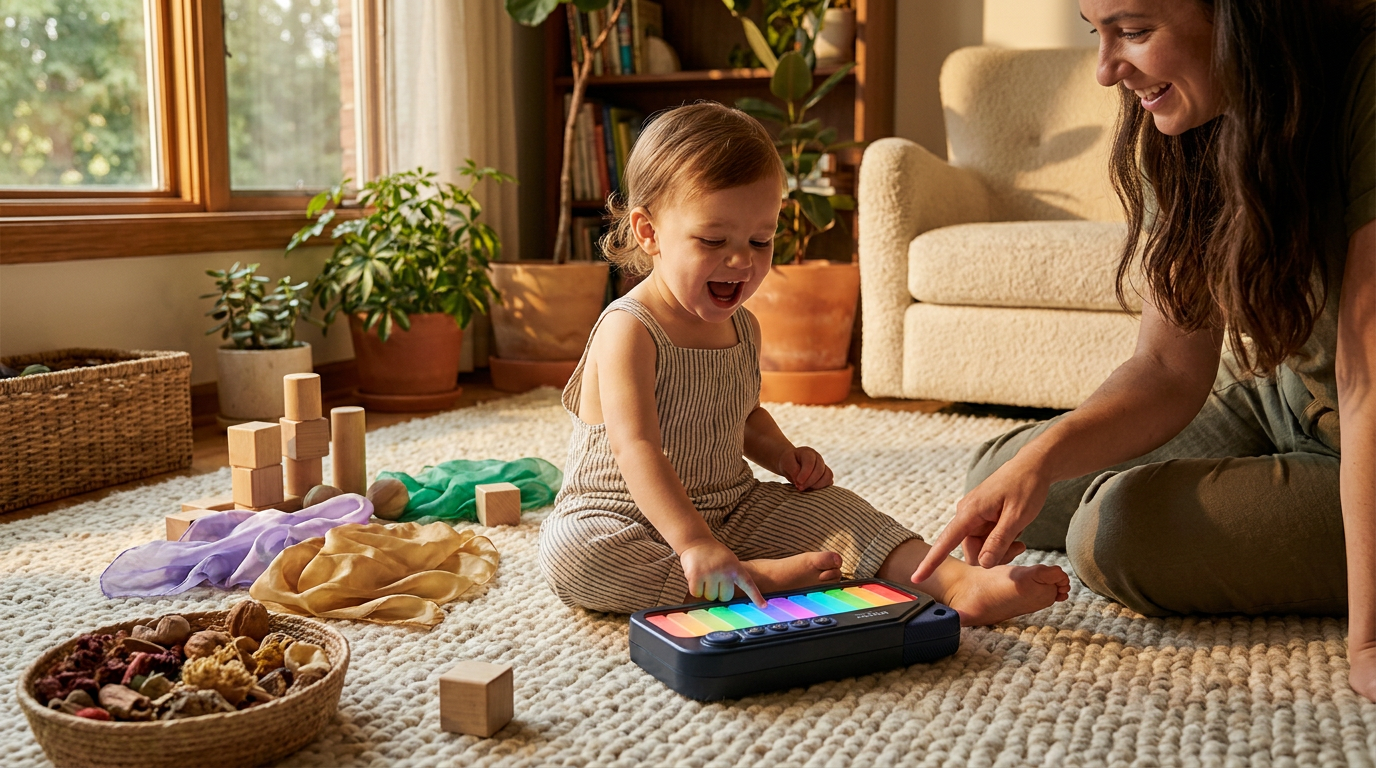
Instead of prompting, observe. Notice how a child interacts with the piano after a stimulating activity or during the lead-up to a tantrum. They may not be attempting to create a melody; they may be using the predictable, repetitive action of pressing a key to self-soothe. This behavior, sometimes called stimming, is a way for them to process their environment. As the Child Mind Institute notes, sensory-seeking behaviors are a way for children to regulate their internal state, and providing a safe outlet is key. The Rainbow Mini Piano provides a stable, repeatable sensory loop—one press, one color, one sound—that serves as an anchor in a chaotic moment.
The Sensory Anchor in Practice
The piano's simple, direct feedback mechanism is its most critical feature. Unlike toys with complex narratives or multiple game modes, it offers a predictable one-to-one relationship between action and result. This predictability is calming. It allows a child to control their sensory input without unexpected noises or flashing patterns that can escalate overstimulation. While many parents look for the best toddler rainbow musical toy based on features, the most valuable feature here is the lack of complexity.
Consider its application during transition periods—moving from playtime to cleanup, or from home to the car. The piano can function as a grounding object. Its consistent tactile and auditory feedback can help a child navigate the sensory disruption of change. This makes it one of the most effective small musical gifts for kids who need a consistent sensory tool, especially during travel. The goal is not musical proficiency; the goal is a regulated nervous system. This even challenges some tenets of the Montessori rainbow piano toy philosophy, which can prioritize structured learning over pure emotional processing.
How is this different from a standard musical toy?
A standard musical toy is often designed as a game with prescribed rules, songs, and outcomes. The Rainbow Mini Piano, when used for regulation, is a tool without a manual. Its purpose is defined by the child's needs in the moment—whether for quiet tactile exploration, repetitive auditory input, or visual color focus. The absence of pre-programmed songs or characters keeps the interaction pure and child-led.
Should I correct my child if they're just hitting the piano keys?
No. This interaction is the entire point. 'Just hitting the keys' is a child's method of exploring cause and effect, processing a feeling, or simply enjoying a repetitive, calming action. Correcting this behavior reintroduces the pressure and expectation the unstructured approach seeks to eliminate. Instead, observe what the pattern and intensity of their interaction might be communicating about their internal state.