Small Musical Gifts for Kids: The Case for a Single Instrument
 Maya ChenContributing Editor
Parents searching for small musical gifts for kids are met with gift guides promoting a wide array of options. Most gift guides push a variety of musical toys, but this 'instrument clutter' actually overwhelms a child's focus and sabotages genuine musical development. The conventional wisdom says variety sparks creativity, but the evidence points to the opposite: a toy box full of noisemakers encourages chaotic, superficial play, not musicianship.
Focus Over Breadth: The Problem with Instrument Clutter
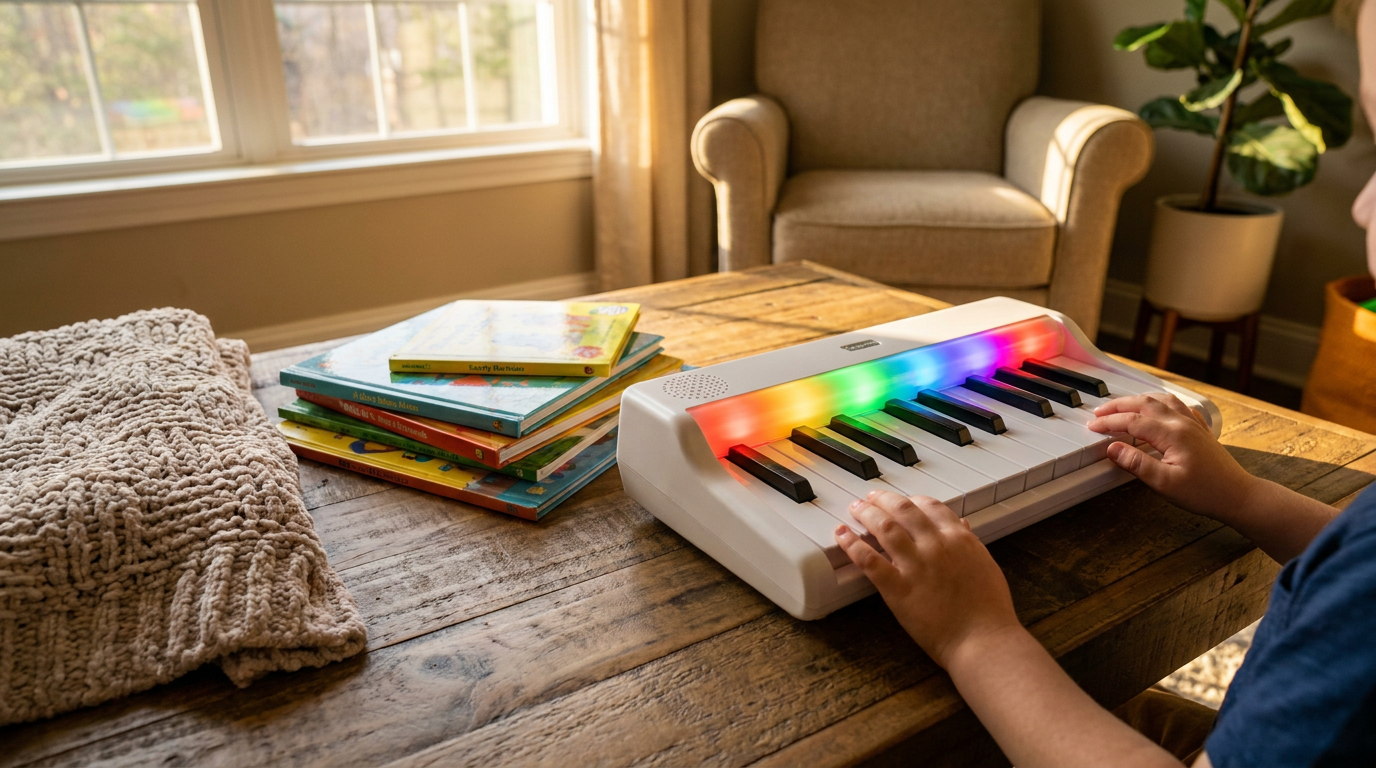
A child presented with a drum, a shaker, a tambourine, and a toy guitar simultaneously doesn't learn four instruments; they learn to make noise. This approach creates cognitive overload, preventing the deep focus required for mastery. A single, quality instrument removes the distraction of choice and encourages a child to explore its capabilities fully. Instead of being a source of overstimulation, one well-designed instrument can become a central tool for sensory play, allowing a child to connect sound, touch, and sight in a structured way. The goal should be to foster concentration, not to fill a toy chest.
The Reward of Progress vs. The Emptiness of Noise
Here's the part nobody talks about: genuine reward comes from measurable progress. Shaking a maraca is momentarily fun, but it has no clear path forward. A melodic instrument, however, offers a tangible goal: learning a song. The process of identifying notes, practicing a sequence, and finally playing a recognizable tune provides a profound sense of accomplishment. This achievement is far more rewarding and motivating than random drumming. Gifting one durable, melodic instrument serves as a better test for your toddler's first rainbow musical toy than offering a collection of disposable noisemakers that offer no path to skill development.
Building a Transferable Musical Foundation
Not all instruments are created equal for learning. A foundational instrument like a piano provides a visual and logical map of musical concepts. The linear layout of keys directly corresponds to the progression of pitch, building a transferable understanding of notes, chords, and scales. As the University of North Carolina School of the Arts notes, the piano's visual nature "can make it easier to learn other instruments in the future." Most percussion toys are single-purpose and teach little beyond basic rhythm. This is the Montessori piano toy contradiction; while many toys are marketed under the Montessori label, only an instrument that supports structured, progressive learning truly aligns with the philosophy of self-directed mastery.
Why is a piano considered a foundational instrument for kids?
A piano is considered foundational because its keyboard provides a clear, visual representation of music theory. The keys are arranged linearly from low to high pitch, making it easy for a child to see the relationship between notes and understand concepts like scales and intervals. This concrete, visual-spatial layout builds a mental framework that is directly transferable to other instruments and to reading sheet music.Does limiting a child to one instrument stifle creativity?
On the contrary, constraints often foster deeper creativity. When a child has only one instrument, they are compelled to explore its full potential—discovering different dynamics, rhythms, and melodic combinations. This deep dive encourages inventive problem-solving rather than flitting between superficial interactions with multiple toys. It's the difference between becoming an expert with one tool versus being a novice with many.I'll change my mind when a toy box of assorted noisemakers can demonstrably teach a child to play a recognizable, three-chord song. Until then, the data points toward depth over breadth.