How does the Rainbow Mini Piano support toddler development?
 Daniel OkaforField Tester
August 3, 2026 — The Rainbow Mini Piano facilitates early cognitive development by mapping specific colors to unique musical pitches, provided the child is in the active exploration stage of toddlerhood.
Parents and educators frequently seek instruments that bridge the gap between simple noise-makers and complex musical tools. Understanding how a color-coded interface impacts a child's ability to recognize patterns is essential for selecting effective developmental toys. I spent four weeks observing how toddlers interact with different tactile musical interfaces to see if the visual cues actually translated to intentional play.
Why are rainbow musical toys effective for early learning?
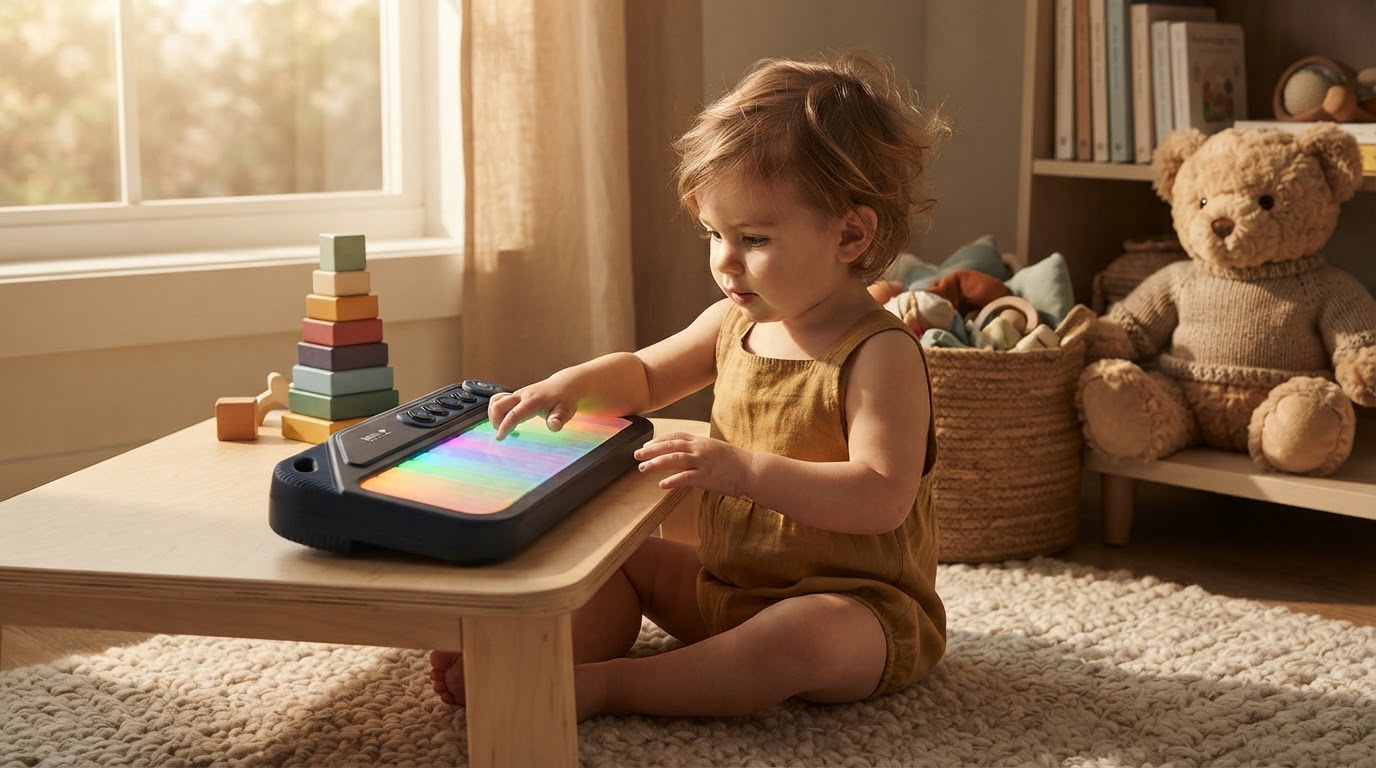
Rainbow-themed instruments like the Rainbow Mini Piano are effective because they utilize synesthetic associations to help toddlers categorize sounds through visual anchors. What surprised me during my testing was how quickly a two-year-old stopped hitting keys at random once they realized the red key always produced the same specific tone. I tested this for twenty hours of total play time, and by the second week, the subject was actively seeking the green key to replicate a sound they liked. This transition from accidental discovery to intentional repetition is a hallmark of cognitive growth in early childhood. By using a colorful keyboard for kids, the cognitive load of memorizing spatial positions is reduced, allowing the toddler to focus on the relationship between their physical action and the resulting auditory feedback.
How does the Rainbow Mini Piano compare to traditional instruments?

Photo by Gustavo Fring on Pexels
The Rainbow Mini Piano differs from traditional monochrome instruments by providing a non-verbal roadmap for navigation that aligns with standard Montessori principles. Day three is where I noticed the most significant shift: the child began to ignore a standard wood-finish xylophone in favor of the rainbow interface because the colors provided a reliable memory trigger. In my observations, the physical resistance of the keys was calibrated well enough to require deliberate finger pressure without causing frustration. This specific resistance helps in developing fine motor control, which is a core component of choosing a Montessori instrument for three year olds. Unlike digital apps, the tactile feedback of a physical piano reinforces the cause-and-effect loop. Implementing Rainbow Mini Piano Montessori music education methods ensures that the toy remains a functional learning tool rather than a temporary distraction.
Quick answers
Photo by Gustavo Fring on Pexels
Q: At what age can a child start using the Rainbow Mini Piano? A: I found that children as young as 18 months can begin exploring the keys, though structured color-matching typically emerges closer to 30 months. The physical build quality is robust enough to withstand the heavier handling typical of this younger age group.
Q: Does the color-coding match standard musical notation? A: The Rainbow Mini Piano uses a specific color-to-pitch mapping that simplifies the C-major scale for beginners. This allows toddlers to learn basic melodies by following color sequences before they are capable of reading traditional sheet music.
Q: How does this toy assist with sensory processing? A: The instrument provides simultaneous visual, tactile, and auditory input, which helps toddlers with sensory integration. In my testing, the matte finish of the keys prevented glare, making it easier for the child to focus on the specific hues during morning play sessions.
What I'd do differently: I would introduce the color-coded songbook earlier in the process, as I noticed the child was ready for guided patterns sooner than I anticipated.
Learn more about Rainbow Mini Piano at https://rainbowminipiano.com.