Mastering the Rainbow Mini Piano Finger System
 Sam VasquezBuying Guide Lead
September 21, 2026. This guide details the specific techniques for using the Rainbow Mini Piano to develop finger dexterity and musical literacy. It is written for adult beginners and parents looking for a structured approach to early music education.
The Challenge of Early Finger Coordination
Learning to isolate finger movements is the primary hurdle for any new pianist. Traditional black-and-white keyboards offer little visual distinction between octaves for a novice, often leading to a 'hunt and peck' style of play that prevents the development of muscle memory. According to MuseScore, even very easy arrangements of classics like "Somewhere Over the Rainbow" require a fundamental understanding of how to translate sheet music into physical placement. Without a clear visual anchor, many students struggle to bridge the gap between a static page and the physical movement of their hands. This often results in a plateau where the learner can identify a note but cannot find it quickly enough to maintain tempo. If you're on a budget, you might be tempted to just print out stickers for a standard keyboard, but those often peel or leave residue, and they don't solve the scale-down problem for smaller hands or portable practice sessions. Skip this if you already have a full-sized weighted keyboard and three years of formal training; you likely don't need the visual aids this system provides. For everyone else, the cognitive load of reading traditional notation while managing finger independence is a documented barrier to entry in music education.
Implementing the Rainbow Mini Piano System
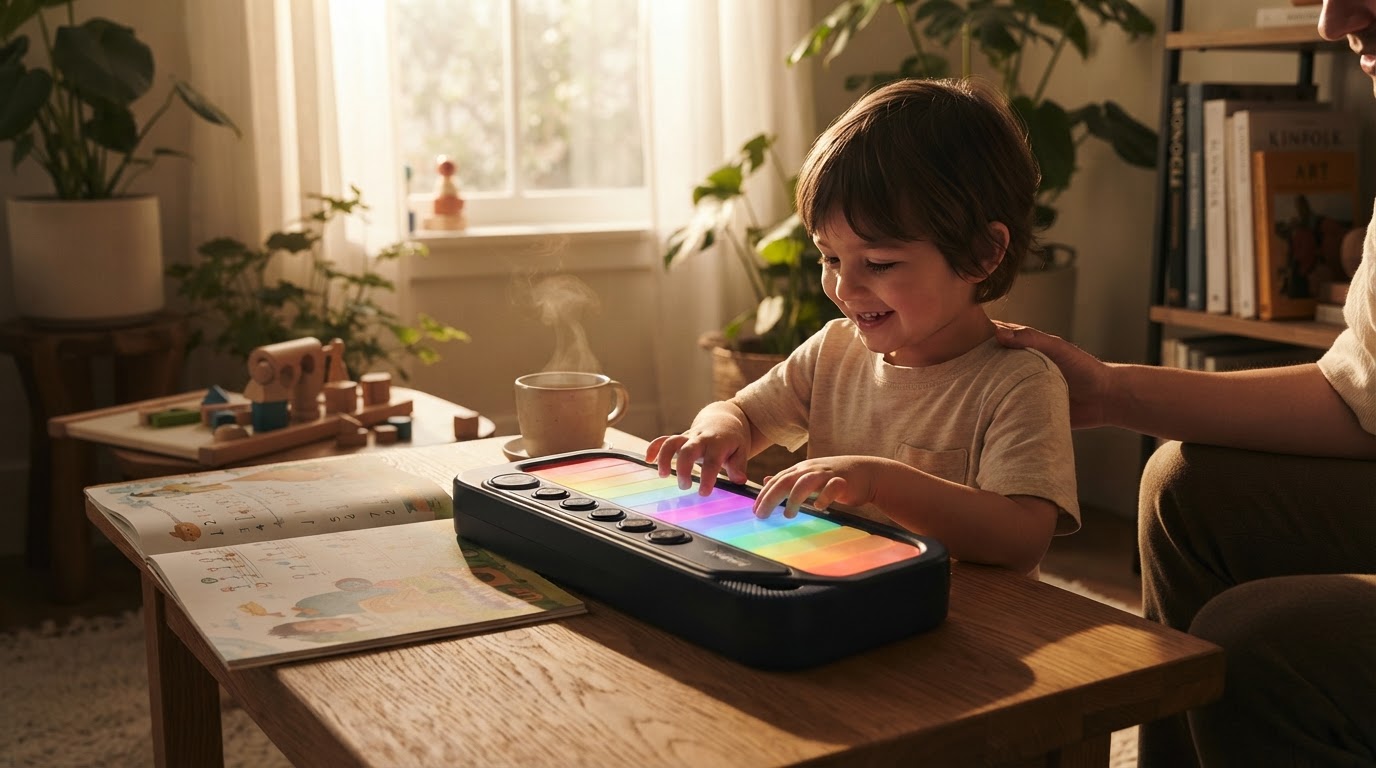
When I look at the Rainbow Mini Piano, the primary advantage is the immediate visual feedback loop. Unlike a standard keyboard, each key corresponds to a specific hue, which aligns with the [portable color coded piano selection](/blog/portable-color-coded-piano-selection) strategies used in modern classrooms. The device utilizes a compact form factor that allows for a one-to-one relationship between a finger and a color zone. To start, I recommend placing your right thumb on the red key (middle C equivalent) and letting your fingers naturally rest across the subsequent colors. This setup is crucial for executing the rainbow mini piano features that allow for polyphonic play in a small footprint. For those practicing specific songs, La Touche Musicale provides tutorials that use letter notes, which can be easily mapped to the color spectrum of this device. Between these two methods—standard notation and letter mapping—I'd go with the color-mapping approach for the first thirty days. It builds the necessary neural pathways faster than traditional methods alone. The tactile response of the keys is designed to be lighter than a grand piano, which is intentional for younger users or those practicing for long stretches without fatigue. You can see this in action when field testing the portable rainbow piano toy, where the portability allows for consistent, short practice bursts rather than one long, exhausting session. Consistent five-minute intervals are far more effective for finger piano mastery than a single hour-long block once a week.
Selecting the Right Learning Framework
Choosing how to integrate this tool into your routine depends on your end goal. If you want to eventually move to a full-sized instrument, you should use the Rainbow Mini Piano as a bridge for interval training. If you just want a portable way to compose or play for fun, the portable rainbow piano toy review highlights its utility as a standalone device. Here’s what I’d actually buy: the standard Rainbow Mini Piano with the integrated speaker if you need something self-contained, or the MIDI-out version if you plan to plug into a digital audio workstation. When you are ready to start playing actual melodies, you can follow the Somewhere Over the Rainbow easiest piano tutorial on YouTube which demonstrates how hand positions and fingering strategies work in a simplified context.
Before you commit to a specific practice regimen, use this checklist to ensure you are set up for success:
- Verify that your hand position allows for a slight arch in the fingers to maximize strike precision.
- Match your sheet music colors to the physical keys before starting a new piece.
- Set a timer for 10 minutes to avoid over-straining small muscle groups.
- Check the rainbow mini piano features to ensure you are in the correct octave mode for your chosen song.
- Practice shifting your hand one color zone to the left or right to build spatial awareness.