Supporting Sensory Growth with the Rainbow Mini Piano
 Jordan HaleStaff Writer
October 1, 2026. This exploration examines the role of tactile, color-coded musical instruments in supporting early childhood development. It is written for parents and educators seeking intentional, durable tools for three-year-old learners.
I remember the afternoon the sun hit the living room floor just as my three-year-old sat down with a new set of wooden blocks. The quiet concentration was palpable, a hallmark of what educators call the "absorbent mind." When I first introduced the Rainbow Mini Piano into this environment, I watched for that same stillness. The first thing I noticed was the weight of the keys—a deliberate resistance that requires a child to engage their fine motor skills rather than just tapping a screen. In a world saturated with plastic electronics that beep at the slightest touch, there is a profound difference in a tool that responds to the physical intent of a child. This transition from passive entertainment to active creation is the cornerstone of the Montessori philosophy. According to The Montessori Twin Mama, introducing instruments like drums, xylophones, or tone blocks allows a child to explore rhythm and sound in a way that respects their developing autonomy. At three, children are moving beyond simple cause-and-effect; they are beginning to understand patterns, sequences, and the joy of mastery. However, many [Montessori musical toys](/blog/montessori-musical-toys) often stop at percussion, leaving a gap for those ready to explore melodic structure. The challenge for most families is finding an instrument that bridges the gap between a simple shaker and a full-sized piano, providing enough complexity to challenge the mind without overwhelming the senses with artificial lights or synthesized sounds.
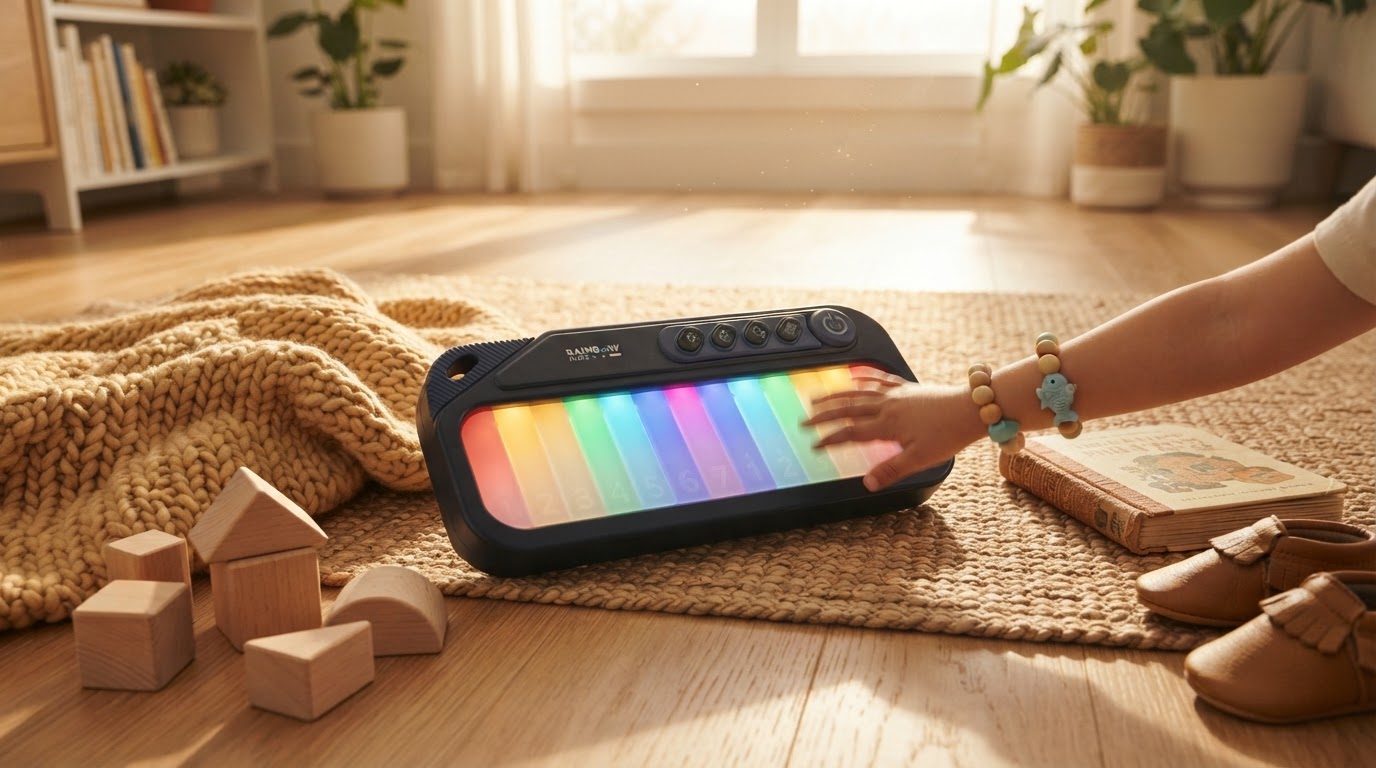
Somewhere around week two, the Rainbow Mini Piano became more than just a vibrant object on the shelf; it became a self-correction tool. The colors on the keys aren't just for aesthetics; they serve as a visual map for the auditory landscape. When a child sees the red key and hears the corresponding note, they are building a neural bridge between sight and sound. This aligns perfectly with the broader category of [rainbow musical toys for toddlers](/blog/rainbow-musical-toys-for-toddlers), where color serves as a guide rather than a distraction. The piano is designed with a compact footprint, making it accessible for small hands to reach every note without straining. Unlike the multi-instrument sets mentioned by Joyreal Toys, which often include drums and xylophones for early musical awareness, this piano offers a singular, focused experience. It allows a three-year-old to sit in a prepared environment and focus entirely on the scale. I watched as the initial random banging evolved into deliberate presses. The sound is acoustic and resonant, lacking the harshness of cheap speakers. This quality of sound is essential; it respects the child’s environment and encourages them to listen closely to the sustain and decay of each note. It turns out that by stripping away the "extra" features—the pre-recorded demos and volume knobs—the child is left with the most important thing: their own capability. This makes it one of the most effective [musical gifts for 3 year olds](/blog/musical-gifts-for-3-year-olds) because it grows with them, shifting from a sensory toy to a legitimate foundational instrument as their cognitive abilities expand.
I keep coming back to the idea of "purposeful play." When choosing an instrument for this specific age group, the decision framework should prioritize the quality of the interaction over the number of features. A three-year-old doesn't need a toy that plays for them; they need a tool that responds to them. This is why the Rainbow Mini Piano fits so seamlessly into a home that values the Waldorf or Montessori approach, much like the wooden sensory drums found at Bella Luna Toys. When evaluating whether a musical tool is appropriate for your three-year-old, consider these specific criteria:
- Acoustic Integrity: Does the instrument produce a natural sound that encourages deep listening?
- Tactile Feedback: Do the keys or surfaces provide enough resistance to help develop finger strength and coordination?
- Visual Logic: Is there a clear, non-distracting system (like color-coding) that helps the child understand the relationship between notes?
- Durability and Material: Is it made from child-safe, high-quality materials that can withstand daily exploration?
- Simplicity of Design: Does the instrument avoid electronic "noise" that distracts from the actual process of making music?