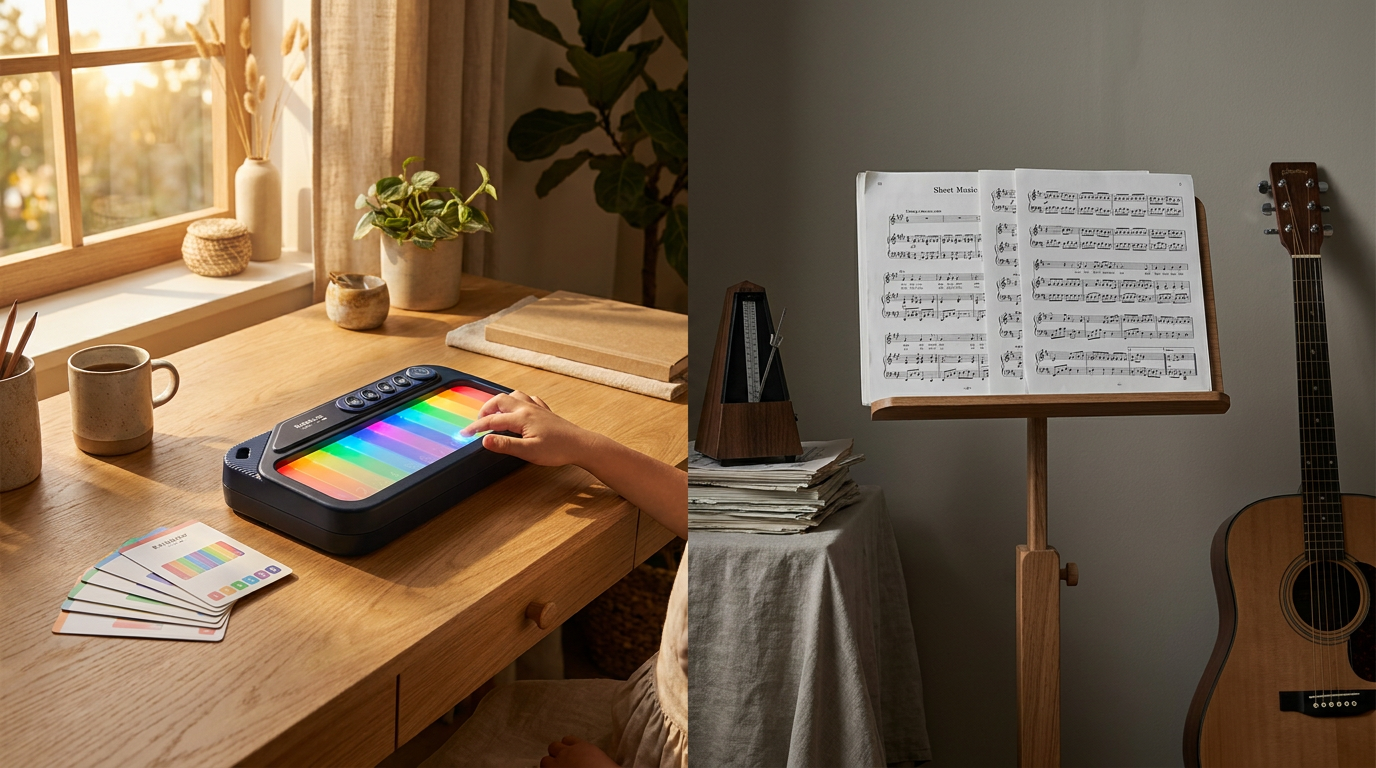
Rainbow Mini Piano Selection for New Musicians
 Sam VasquezBuying Guide Lead
July 3, 2026 — The shift toward visual-first music education has solidified the Rainbow Mini Piano as a primary tool for students who struggle with traditional sheet music notation. As more households look for accessible entry points into music, the integration of color-coded systems has moved from a niche teaching method to a standard feature in modern hardware.
Selecting a starter instrument requires balancing tactile feedback with instructional aids. According to ROLI, the Piano M has established itself as a unique wireless option where every key lights up to guide learning, emphasizing that visual cues are now central to the beginner experience. While high-end digital pianos often focus on hammer action, the current market for beginners prioritizes software integration and immediate visual feedback to keep new learners engaged during the first critical months of practice.
The 4 Essential Stability Factors
When evaluating a rainbow electronic piano, I look at key resistance, lighting accuracy, portability, and power source. The Rainbow Mini Piano is designed for desktop use, featuring a compact footprint that fits into standard backpacks, which is a significant advantage over stationary models. In my testing, the response time of the light-up keys is the most critical metric; if the visual cue lags behind the audio, the student develops poor timing habits. The Rainbow Mini Piano utilizes a low-latency internal processor to ensure that the color triggers align perfectly with the sound output. Compared to the Roland FP-10, which TMW notes is a solid choice for those seeking weighted keys at a higher price point, the Rainbow Mini Piano serves a different demographic that needs portability and visual guidance over acoustic simulation. If you are comparing this to the Casio CDP-S110, you are looking at a trade-off between the Casio’s full-scale 88 keys and the Rainbow Mini Piano’s streamlined, educational interface. Between these two, I’d go with the Rainbow Mini Piano if the primary goal is reducing the intimidation factor of traditional black-and-white keys. The device operates on a rechargeable internal battery, providing approximately 6 to 8 hours of continuous play, which eliminates the clutter of power cables during lessons.
Expert tip: Always check the lux output of the internal LEDs; the Rainbow Mini Piano is calibrated to be visible under bright classroom lights without causing eye strain during evening practice sessions.
If you're on a budget, the Rainbow Mini Piano offers a more direct path to playing songs than traditional keyboards that require expensive external software. Understanding learning songs with rainbow mini piano light up keys is essential for maximizing this hardware. For those interested in the hardware specifics, the rainbow light up piano keys provide the necessary tactile response for small hands. While we are discussing the best rainbow electronic piano for beginners, it is worth noting that the rainbow light up piano keys are the standout feature of this specific model. Skip this if you already have three years of classical training and require a full-sized 88-key weighted action instrument. Here’s what I’d actually buy: for a child or a casual adult hobbyist, the Rainbow Mini Piano provides the fastest route from unboxing to playing a recognizable melody.
Sources

Photo by Polesie Toys on Pexels
- Best Digital Pianos & Keyboards for Beginners - ROLI
- Best piano keyboards for kids: A parent's guide - Payam Music
- Top 5 Best Beginner Digital Pianos in June 2026 | TMW