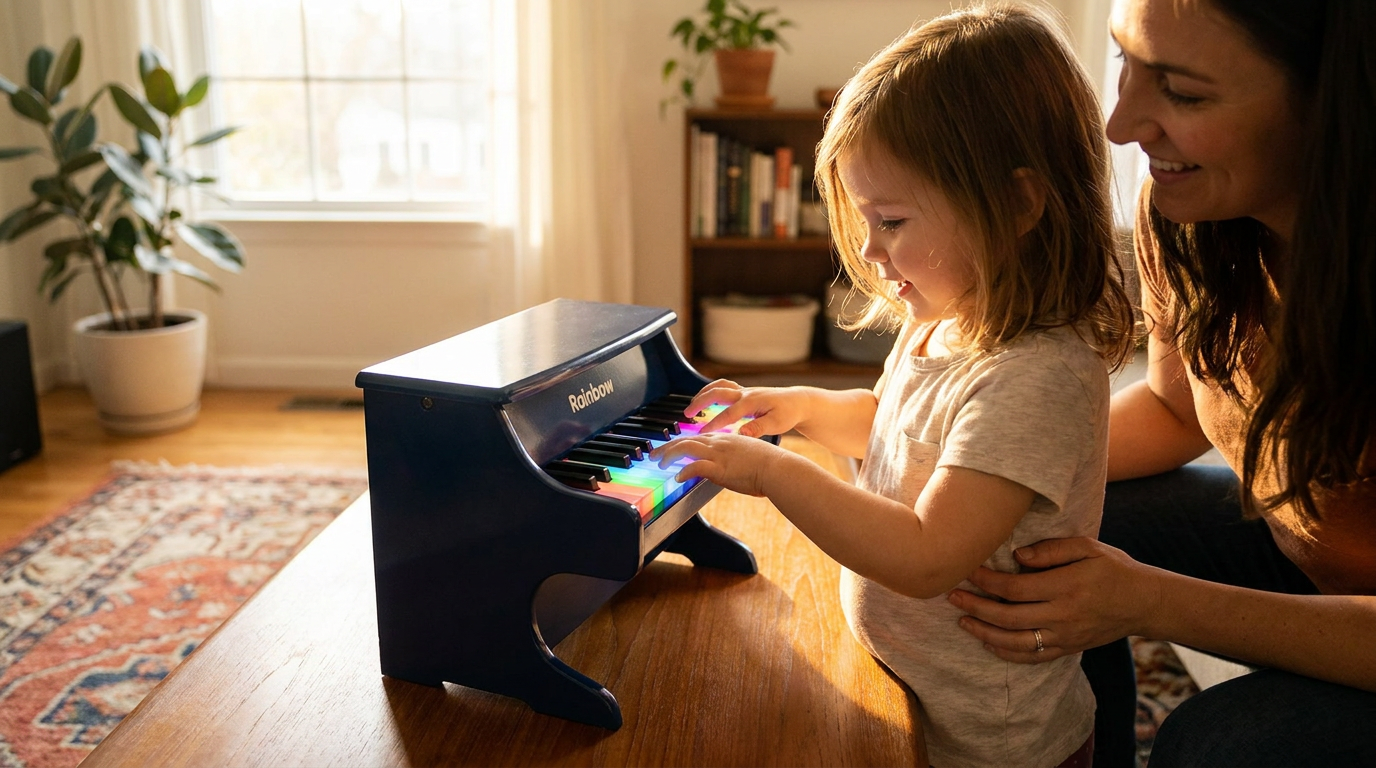
Learning Songs with Rainbow Mini Piano Light Up Keys
 Jordan HaleStaff Writer
July 1, 2026. This exploration details the practical application of light-guided musical instruction for those starting their journey. It is designed for parents and adult learners seeking a more intuitive way to connect with the keyboard.
I remember the afternoon I sat down at a traditional upright, staring at eighty-eight identical white and black levers. The silence was heavy. Without a guide, those keys felt less like an instrument and more like a locked door. The first thing I noticed was how quickly frustration sets in when the brain has to translate abstract sheet music into physical finger movements. For a child, this barrier is even higher. Traditional methods often rely on rote memorization that can feel clinical and detached from the joy of sound. According to the LeapFrog® Learn & Groove® Rainbow Lights Piano™ Musical Toy documentation, integrating color and light allows even the youngest players to associate specific tones with visual stimuli, such as lighting up a cloud face in various colors to teach numbers and colors alongside notes. This sensory bridge is critical because it replaces the anxiety of being 'wrong' with the curiosity of following a glow. When the keyboard communicates back to the player, the learning process shifts from a solo struggle to a collaborative dialogue between the student and the instrument.

Photo by Gustavo Fring on Pexels
Somewhere around week two, the Rainbow Mini Piano changed how I perceived the layout of the scale. Unlike standard keyboards, this instrument utilizes rainbow light up piano keys to create a map of the octave. When I press a key, the immediate chromatic feedback reinforces the relationship between the note's pitch and its position. This is particularly effective when looking for the best rainbow electronic piano for beginners, as the visual cues significantly reduce the cognitive load required to memorize finger placements. The Rainbow Mini Piano integrates these lights directly into the action, ensuring that the illumination is a functional part of the play experience rather than a distraction. It turns out that having a visual anchor allows for faster transition into complex melodies. While other devices, like the Portable Smart Piano Keyboard mentioned by ZPilots, offer features like MIDI expansion and hundreds of tones, the core value remains the interactive lesson potential of the lights themselves. By following the rainbow light up piano keys, I found myself playing through simple scales without checking a manual. The system provides a tactile and visual roadmap that makes the best rainbow electronic piano for beginners an essential tool for those who learn best through doing rather than reading. The light guides essentially act as a digital tutor, showing you exactly where your hands need to land next.
I keep coming back to the idea that the right instrument should lower the barrier to entry, not raise it. When evaluating a light-guided system, I look for how the interface supports long-term growth rather than just providing a temporary novelty. The Rainbow Mini Piano succeeds because it uses its rainbow light up piano keys to build muscle memory that eventually transfers to non-illuminated instruments. If you are deciding whether this approach fits your household, consider these specific criteria:
- Visual Clarity: Ensure the lights are distinct enough to be seen in a well-lit room without being harsh on the eyes.
- Responsiveness: The light must trigger exactly when the key is depressed to reinforce the connection between sight and sound.
- Educational Value: Look for systems that use colors to represent specific notes consistently across different octaves.
- Portability: Consider if the footprint allows for practice in different environments, as consistency is key to learning.
- Build Quality: The keys should feel substantial and offer enough resistance to develop proper finger strength.
Experience the intersection of color and sound to begin your musical journey today.